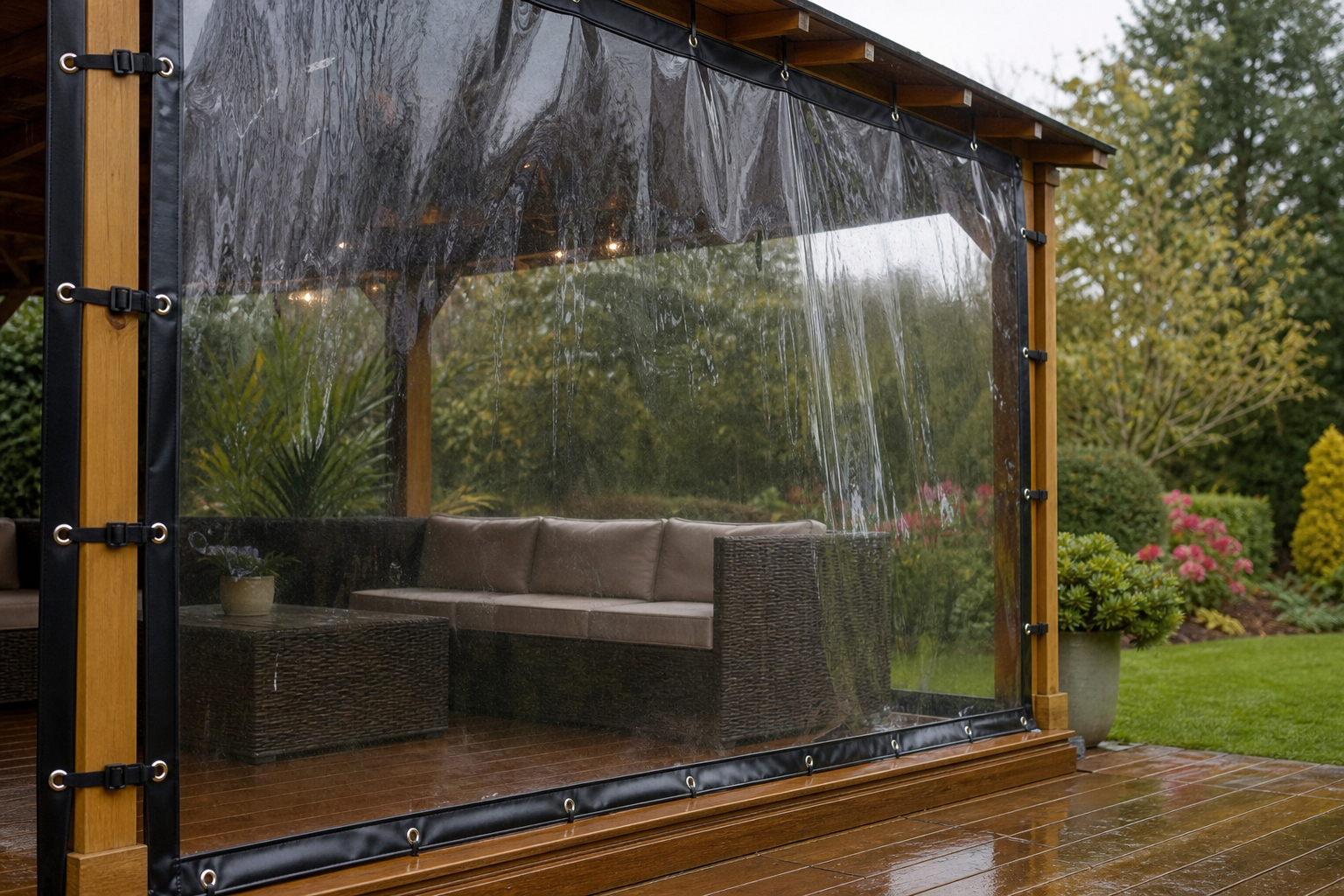
A clear PVC tarp rarely fails everywhere at once. It usually tells you where the installation is struggling: a corner stretches, one edge chatters, water appears on the inside or the sheet refuses to hang smoothly. Diagnose the pattern before replacing the panel.
Why the tarp flaps
Flapping means moving air can get behind the panel and the attachment system allows repeated travel. Add balanced support rather than pulling one or two grommets harder. Check the top edge first, then stabilize both vertical edges and the bottom without creating a trip hazard.
Why the panel looks wavy
Flexible PVC is not glass. Rolling, temperature and uneven attachment can produce ripples. Let a cold panel warm naturally, support its full top edge and increase tension gradually across opposing points. Do not force a frozen sheet flat.
Why condensation forms inside
People, wet furniture, soil and temperature changes add moisture. When humid interior air meets cold PVC, droplets form. Open a protected high vent and a lower air path, dry wet furnishings and avoid sealing every gap while the space is occupied.
Why grommets or corners tear
Damage around one fastener indicates concentrated load. Inspect perimeter reinforcement, sharp hooks, grommet alignment and missing anchors. A thicker sheet cannot compensate for a weak or poorly supported edge.
When to take panels down
Remove or secure panels before severe wind, heavy snow or conditions beyond the gazebo and panel manufacturers’ limits. Seasonal walls are weather screens, not structural bracing.
Confirm dimensions, edge construction and anchor spacing before ordering.